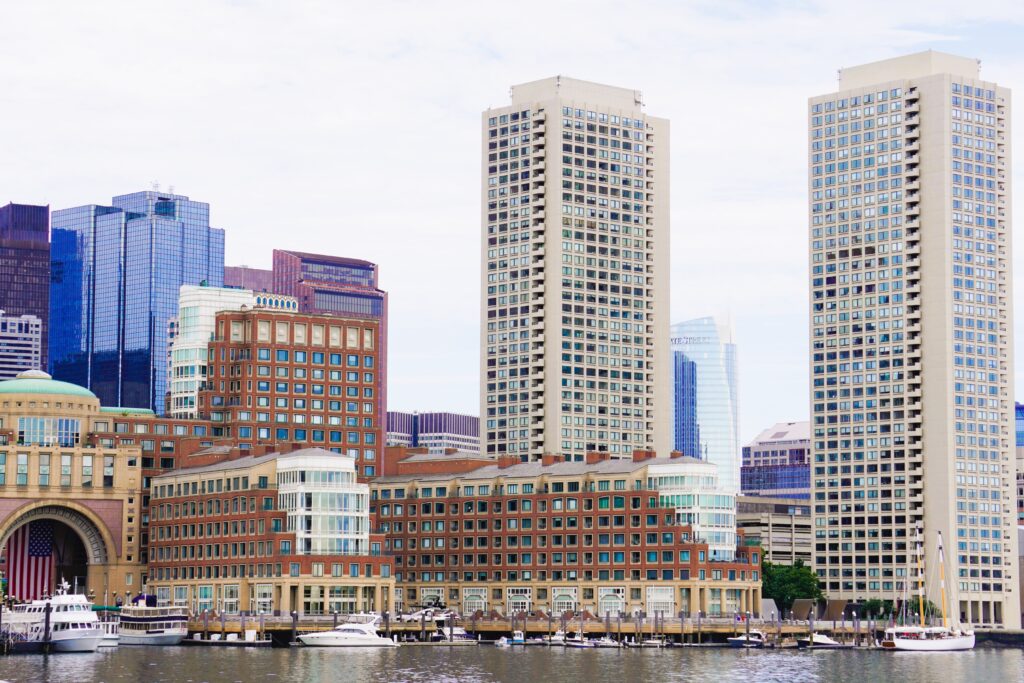
This summer, our family took a day trip to Boston, exploring some of its famous historic sites—Faneuil Hall, Boston Harbor, and Acorn Street. Even though I lived in the area near Harvard years ago, I had never really made the time to walk through these pieces of history until now.
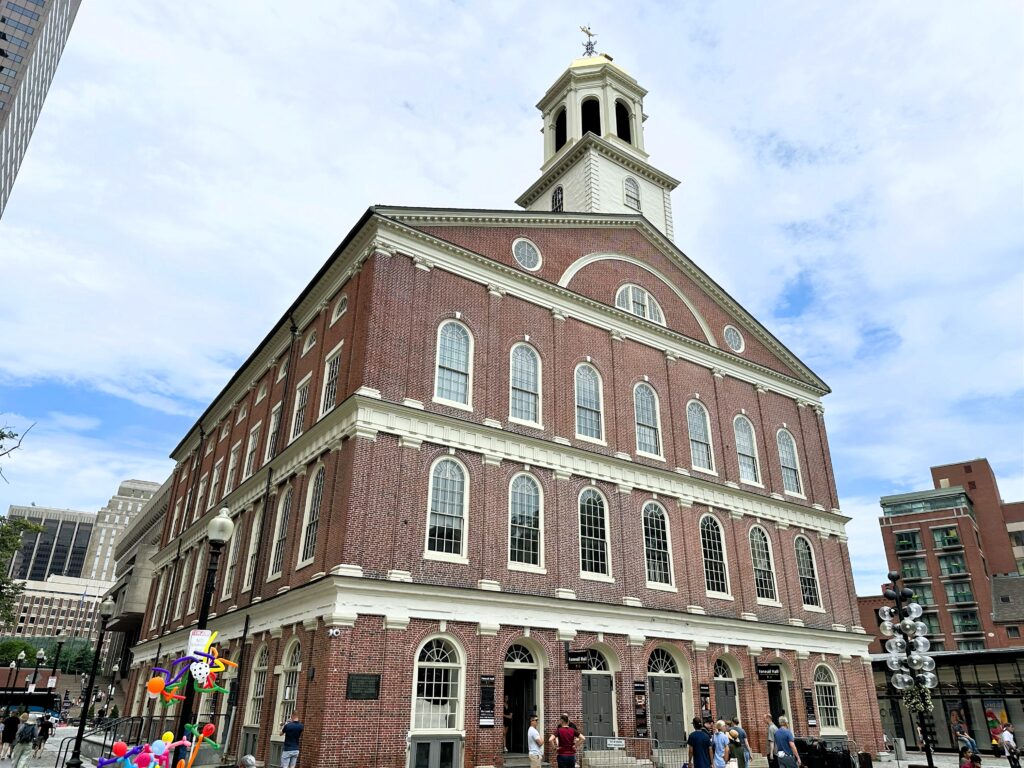
Our first stop was Faneuil Hall, built in 1742 by the wealthy Boston merchant Peter Faneuil. This bustling meeting hall and marketplace is where merchants, fishermen, and speakers would gather. Over time, it became the heartbeat of local government and community life. As Boston grew, so did Faneuil Hall—with Quincy Market added in 1826, followed by South Market and North Market in 1827, turning the area into a thriving marketplace named after Mayor Josiah Quincy.
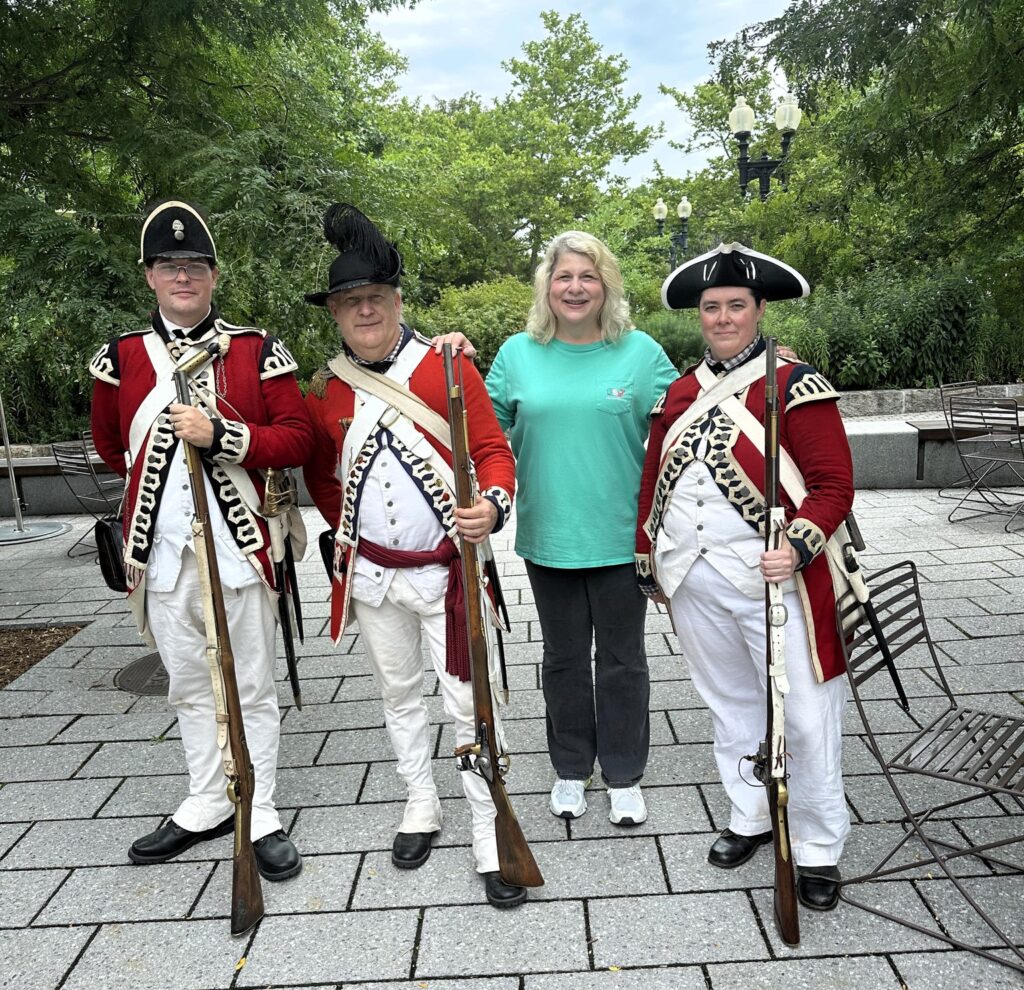
What made the visit even more personal was knowing that the Ancient and Honorable Artillery Company of Massachusetts—the oldest chartered military organization in America—has been based here since the 1600s. My 10th great-grandfather, William Spencer of Cambridge, was part of this very company. Standing in that place I felt a connection to my grandfather knowing he was a part of our great history!
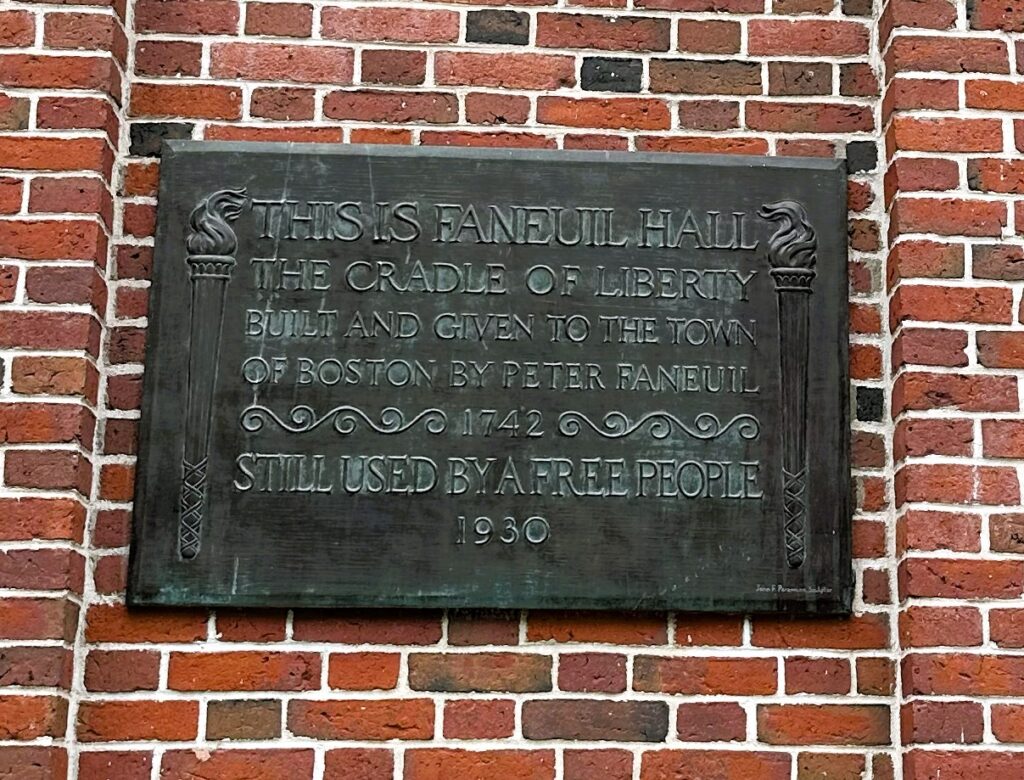
The Cradle of Liberty Built and Given to the Town of Boston by Peter Faneuil
1742
Still Used by Free People
1930
Engraved by Paul Revere
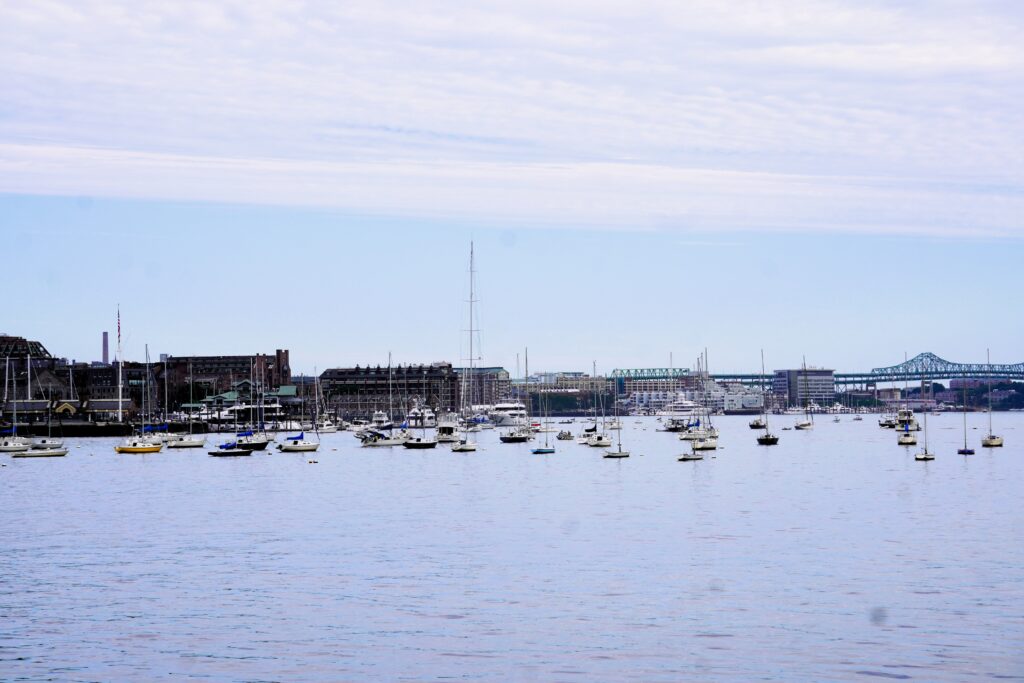
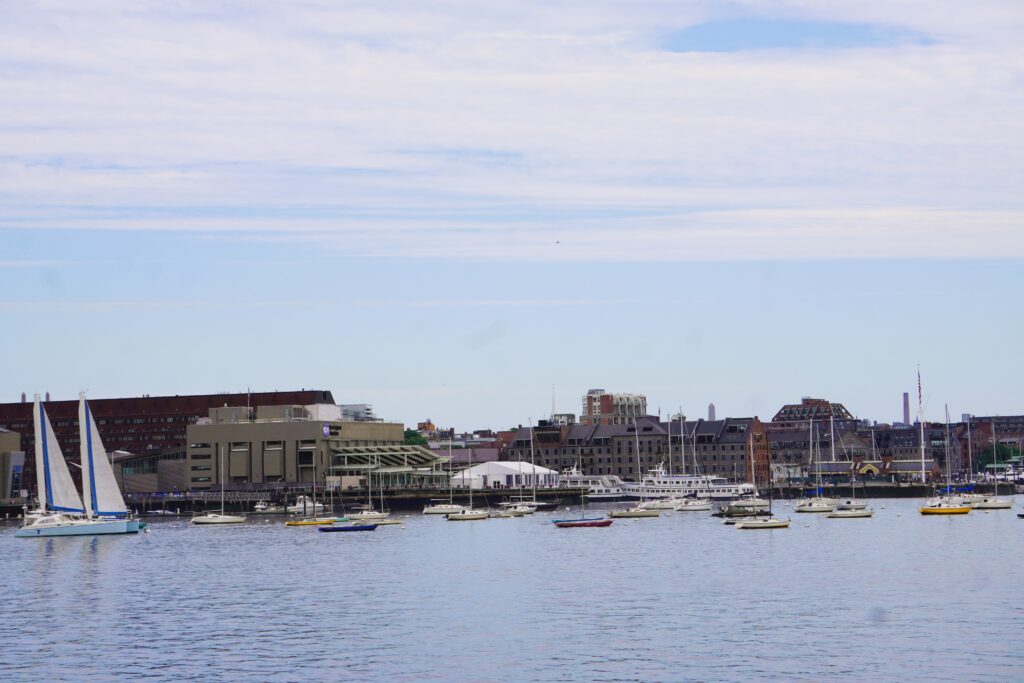
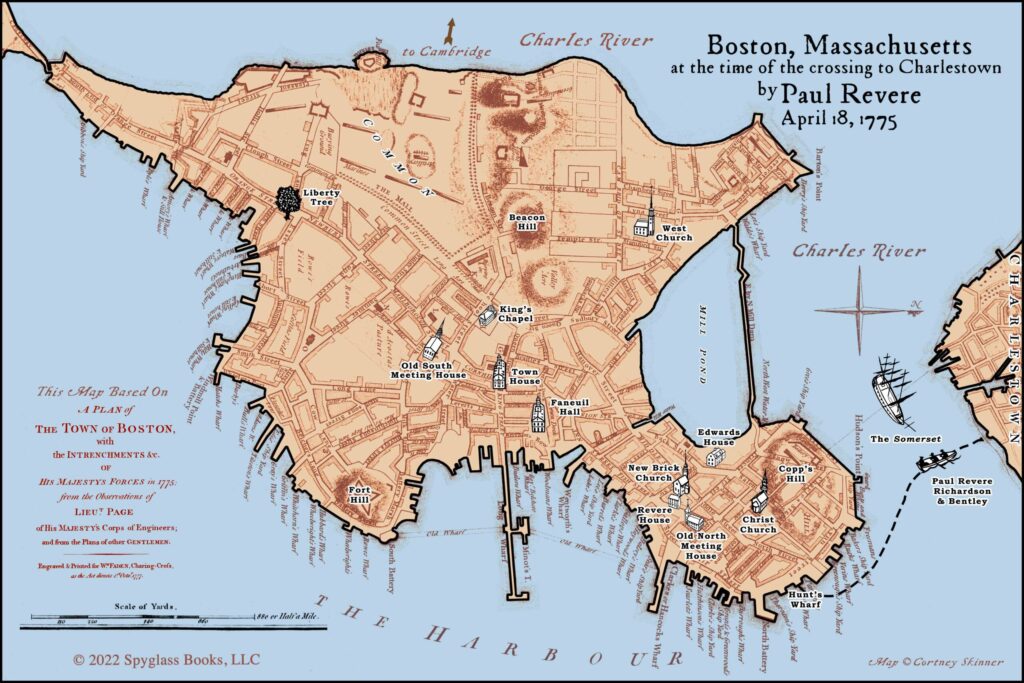
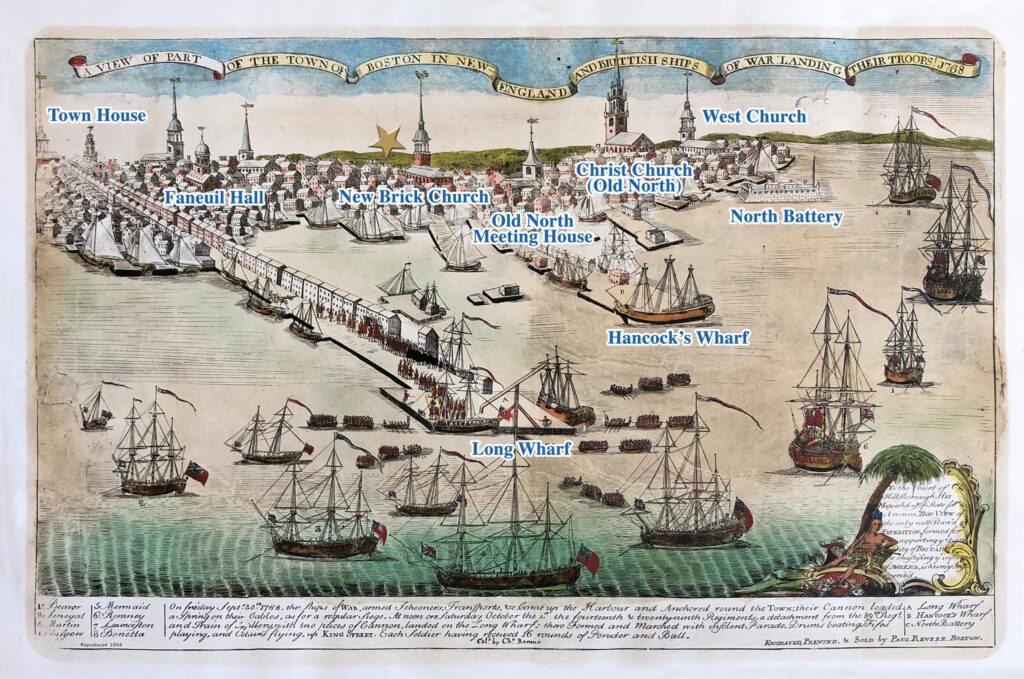
Next, we wandered along Boston Harbor, a place that’s witnessed pivotal moments in American history. I could almost picture the night of December 16, 1773, when colonists dumped 342 chests of tea into the harbor during the Boston Tea Party—a bold stand against British taxation that sparked the Revolution. The harbor was also crucial during the Battle of Bunker Hill, supplying troops and naval support in that early clash of the war. Through the 19th century, Boston Harbor transformed into a bustling center for immigration and commerce, shaping the city’s culture and economy.
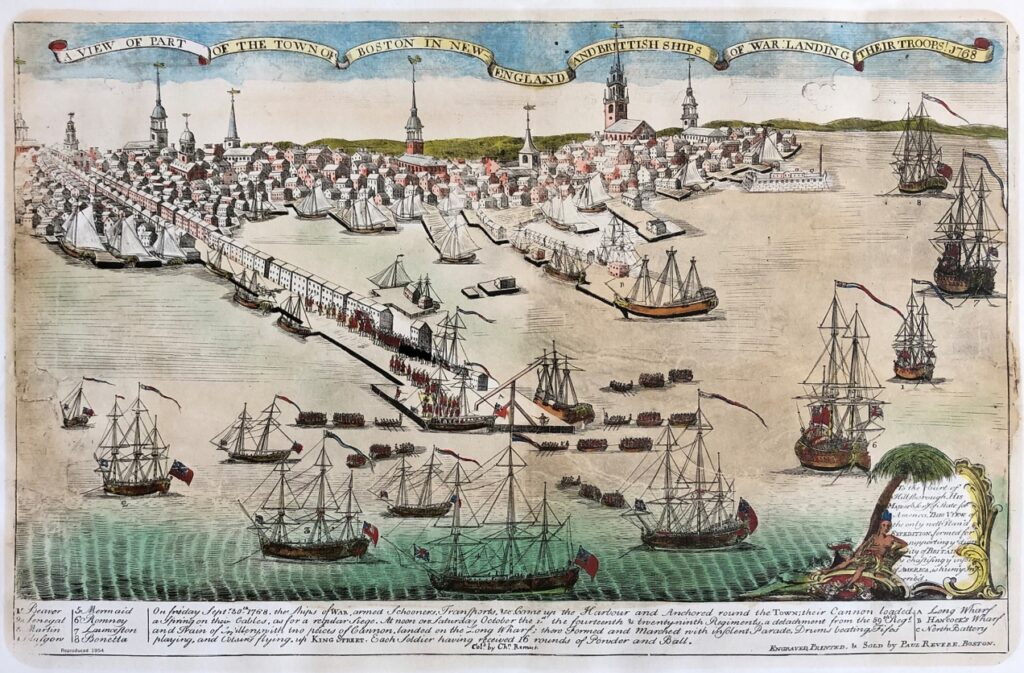
British naval vessels, including armed schooners and transport ships, dock
in Boston Harbor to begin their occupation of the city.
Engraving by Paul Revere
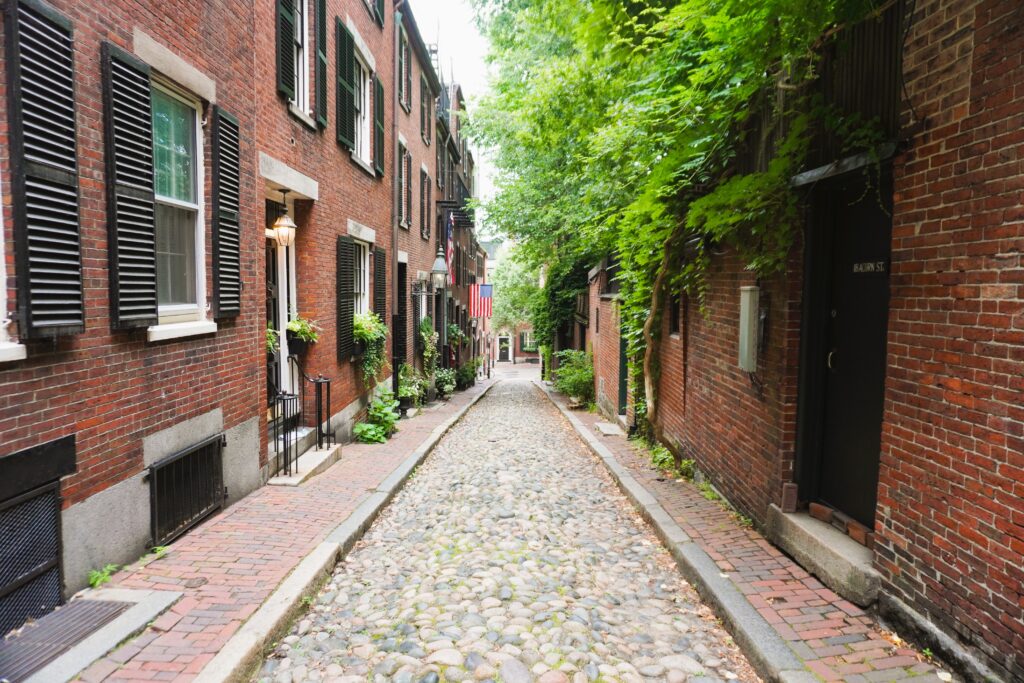
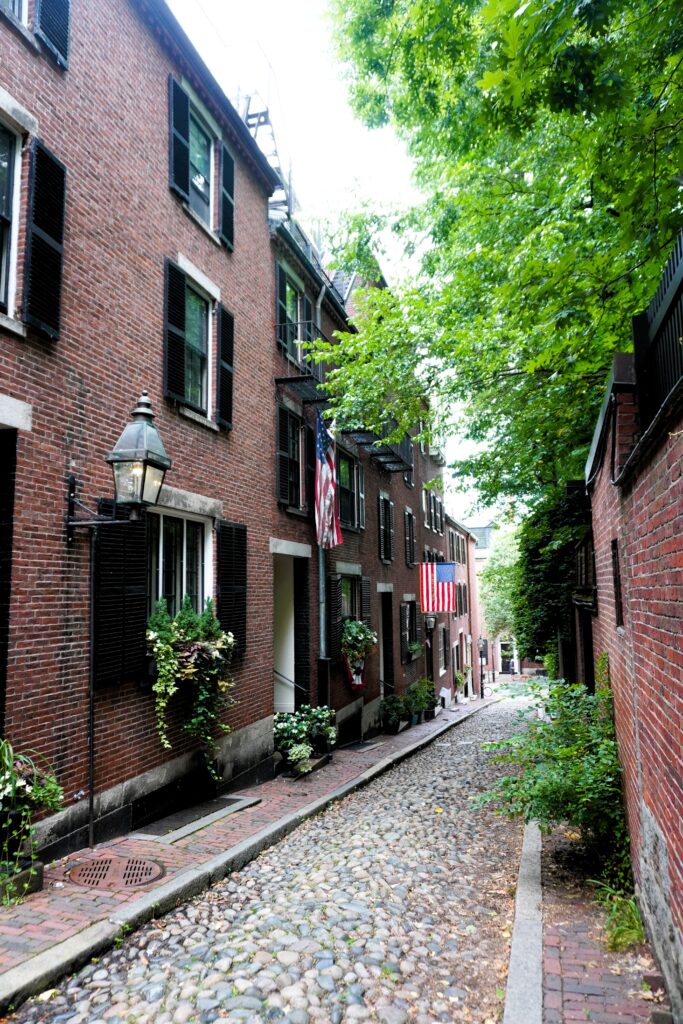
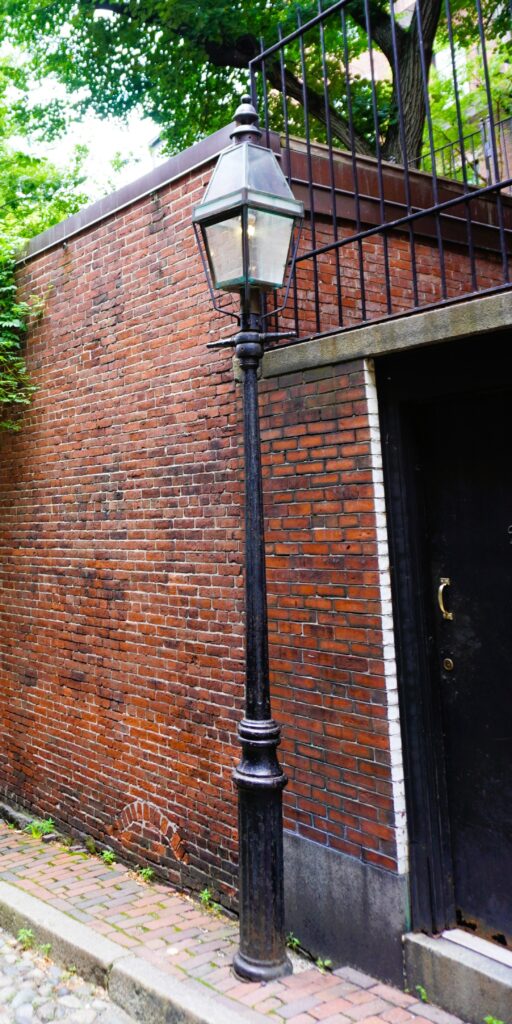
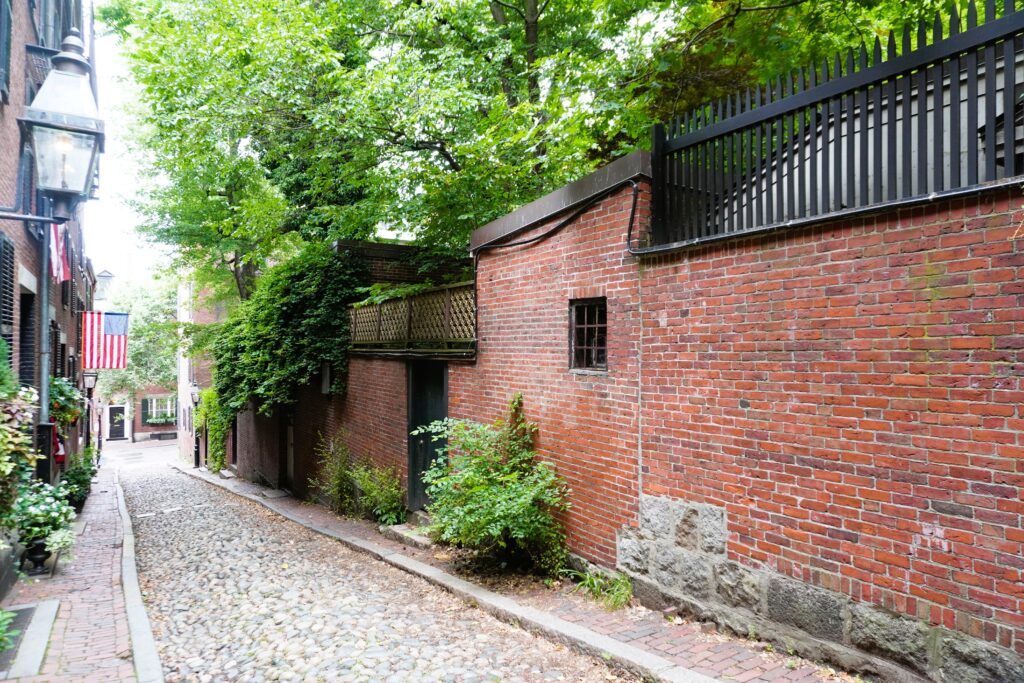
Finally, we strolled down Acorn Street in Beacon Hill—a beautiful cobblestone street that’s one of the oldest in Boston, dating back to 1823. The nine brick row houses lining the street, built by architect Cornelius Coolidge between 1828 and 1829, once housed servants and artisans who worked for Beacon Hill’s wealthy families.
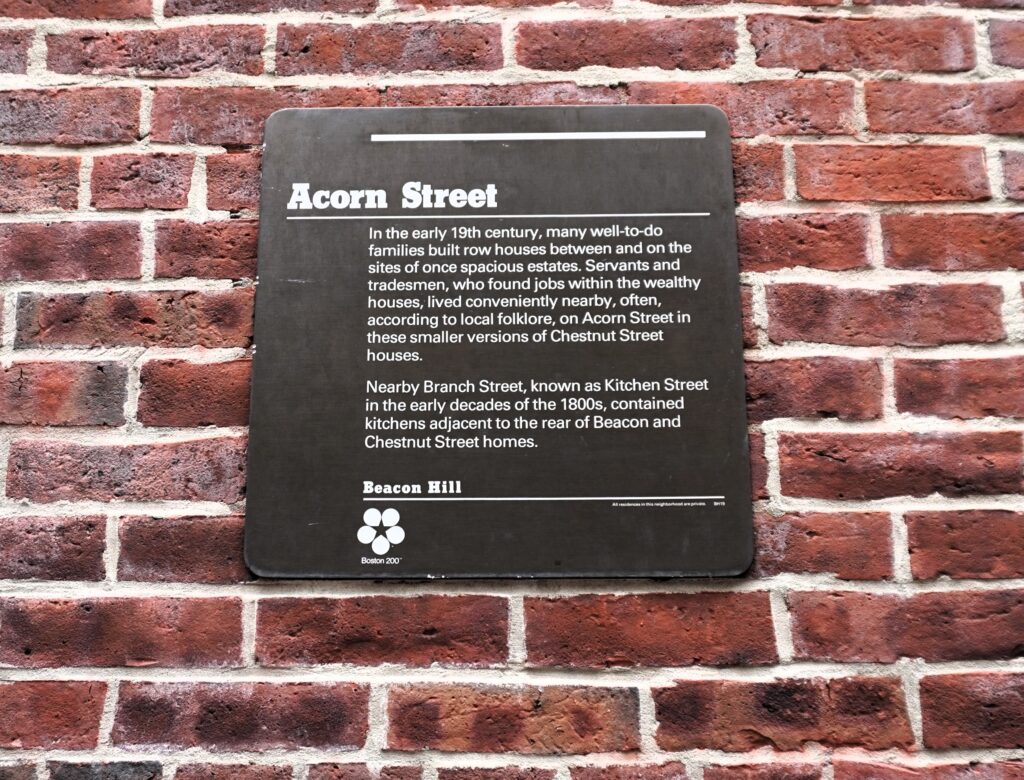
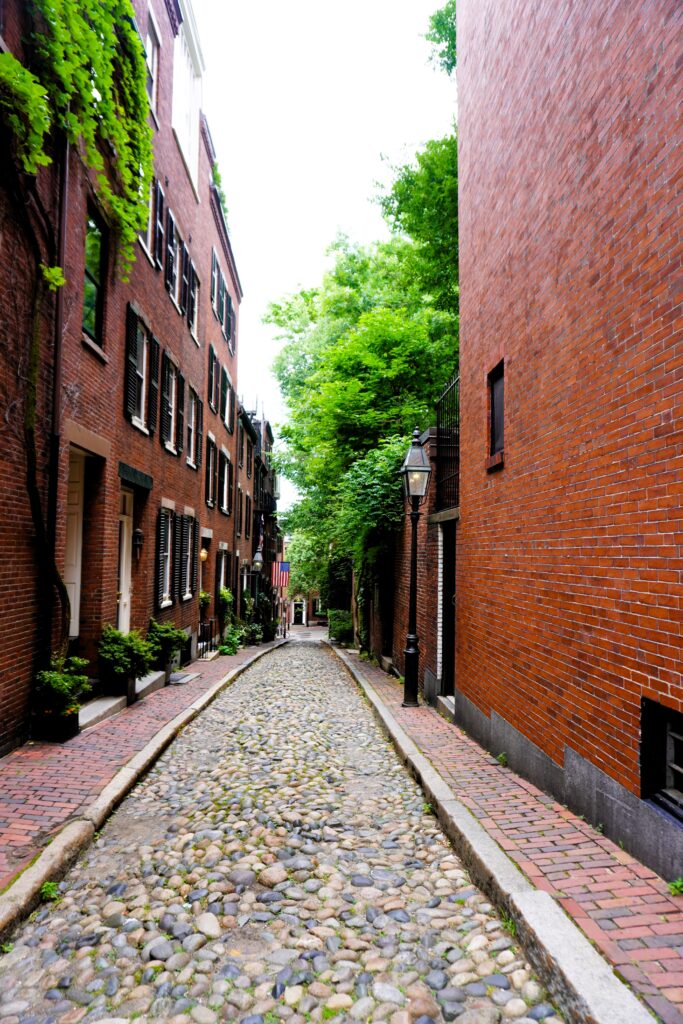
Though younger than Boston itself, founded in 1630, Acorn Street gives a rare glimpse into 19th-century Boston and has become one of the city’s most charming and sought-after addresses.
Spending the day in these historic spots reminded me how important it is so remember Boston’s courageous and great historic past.


