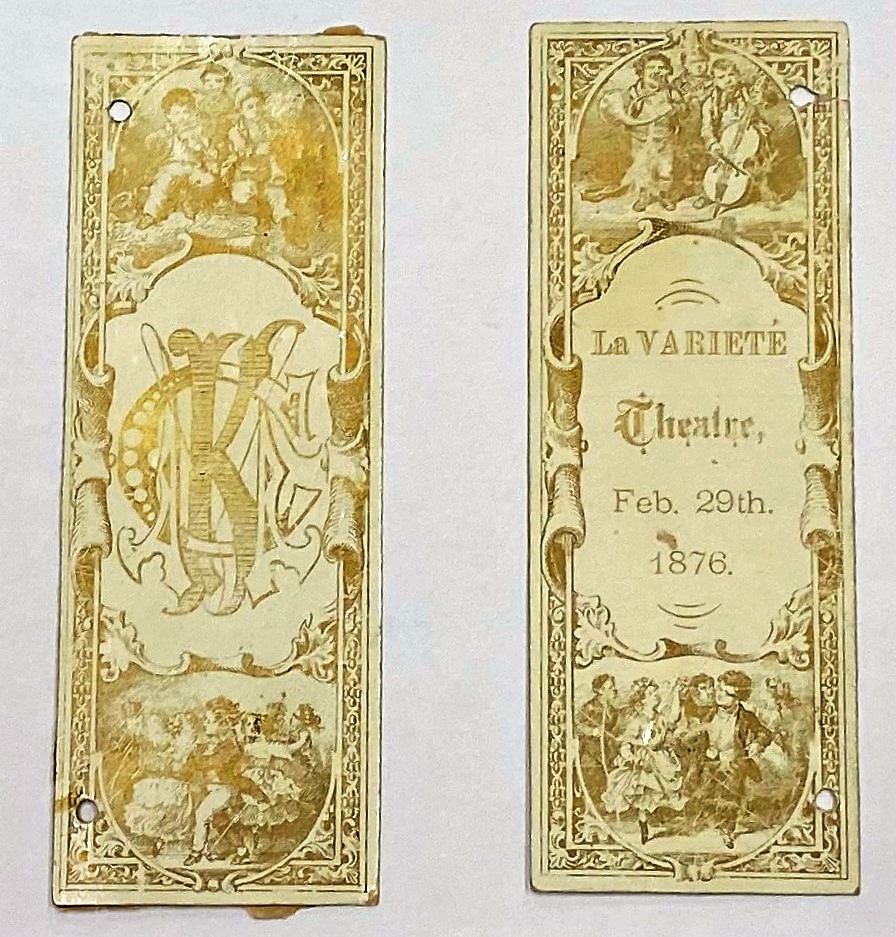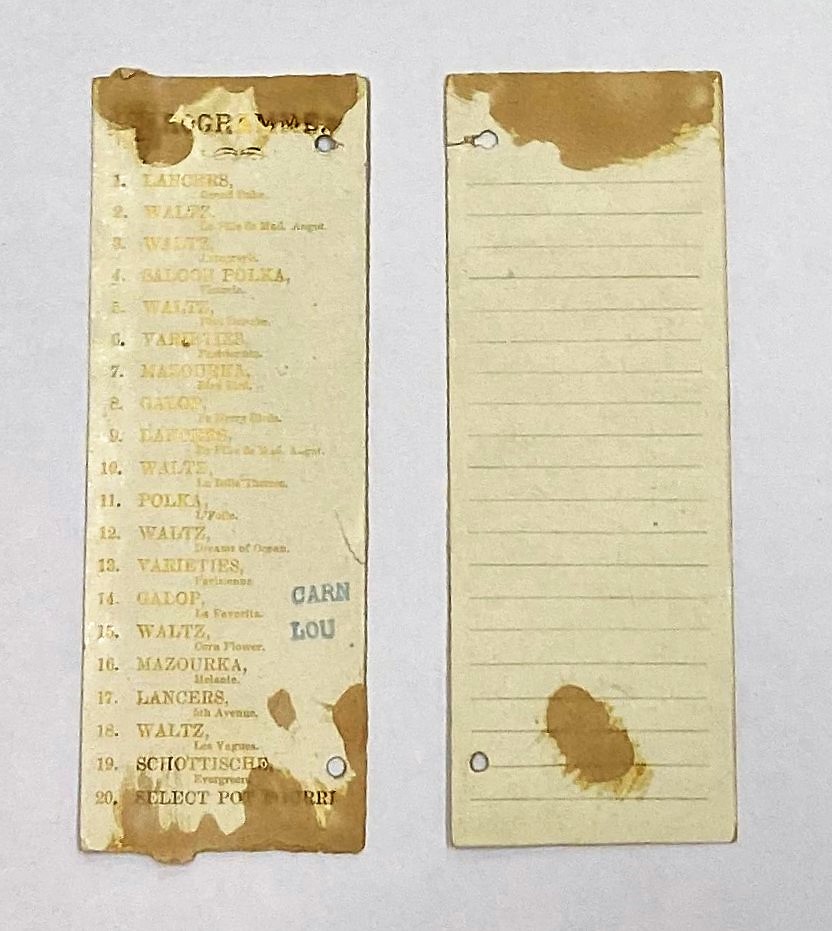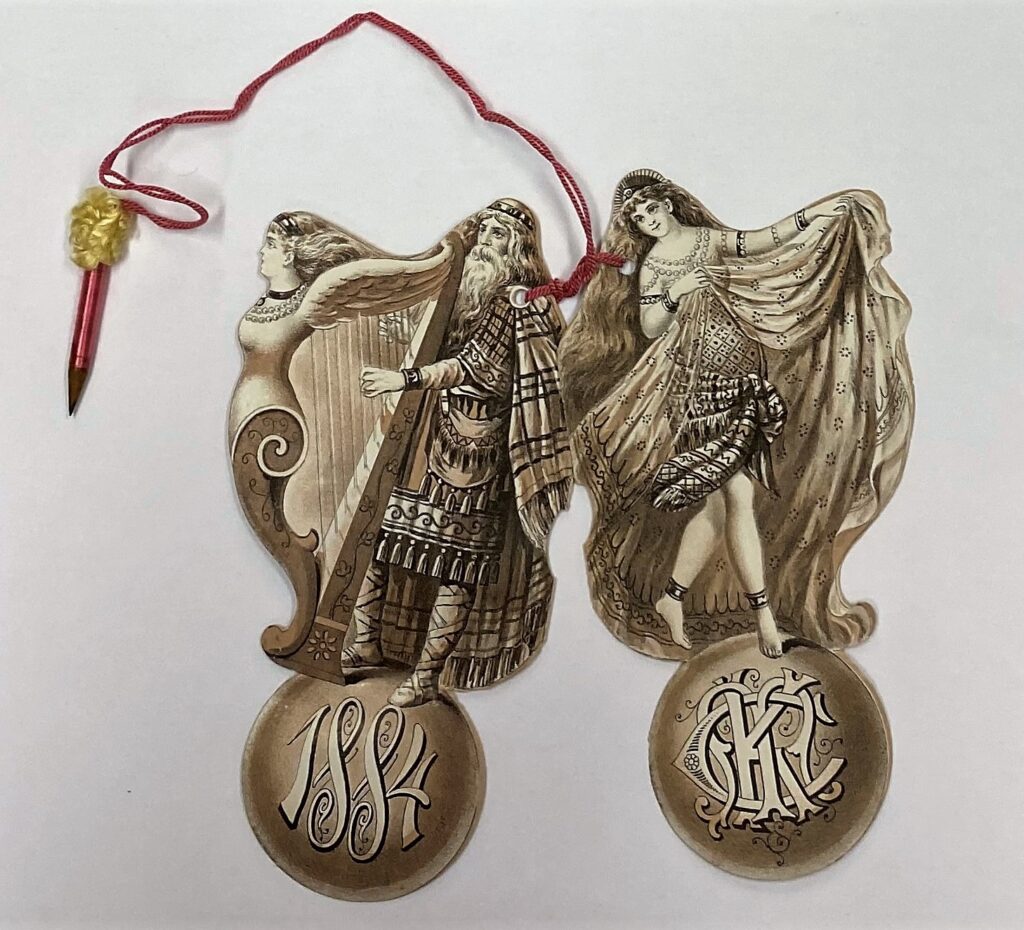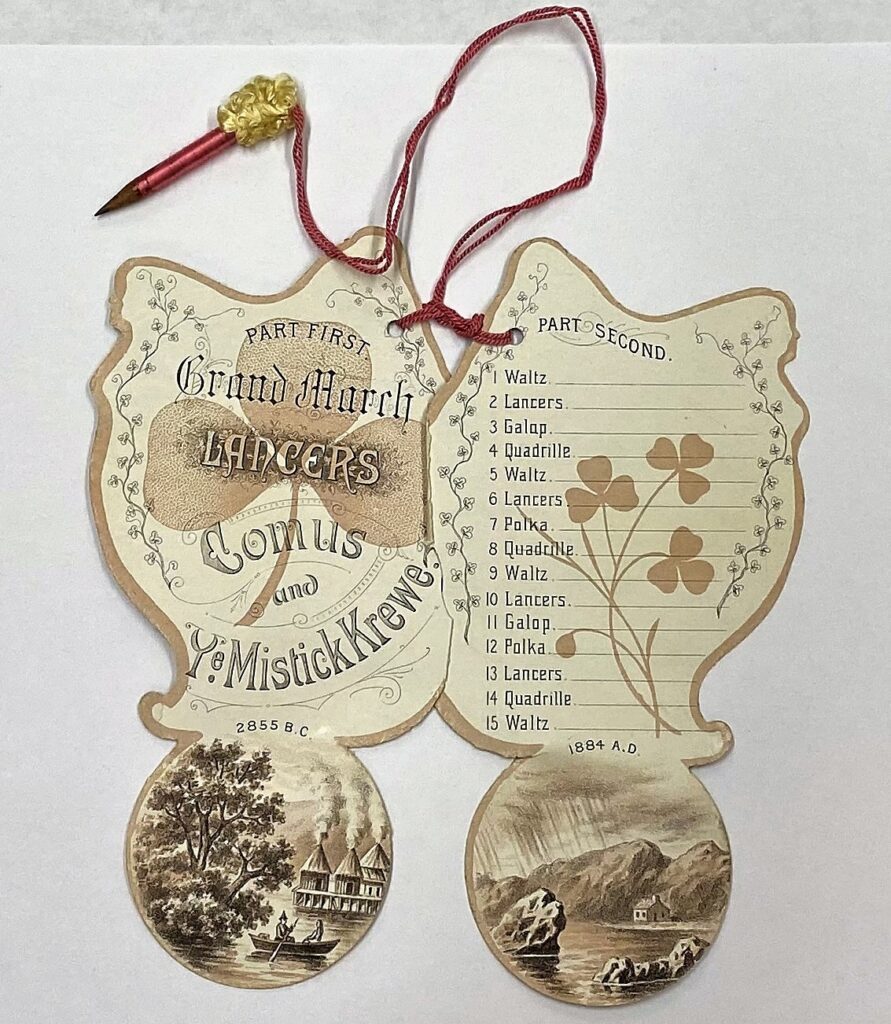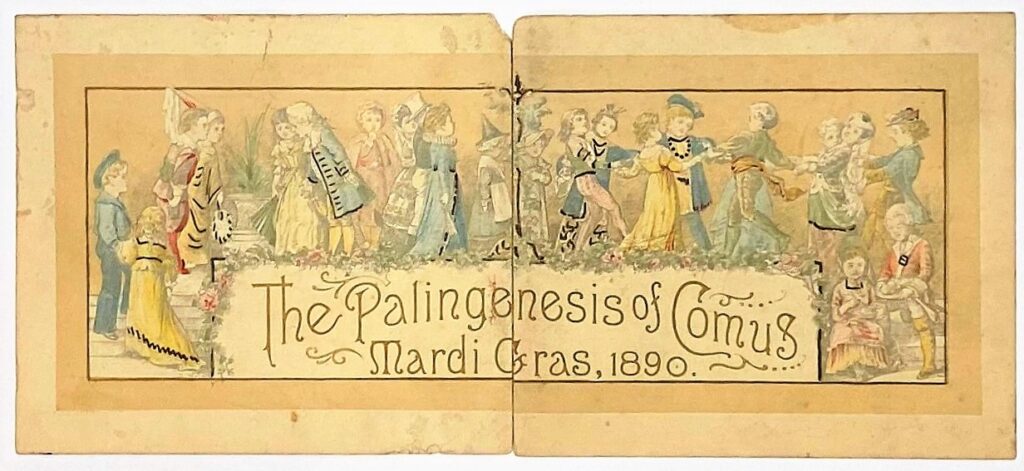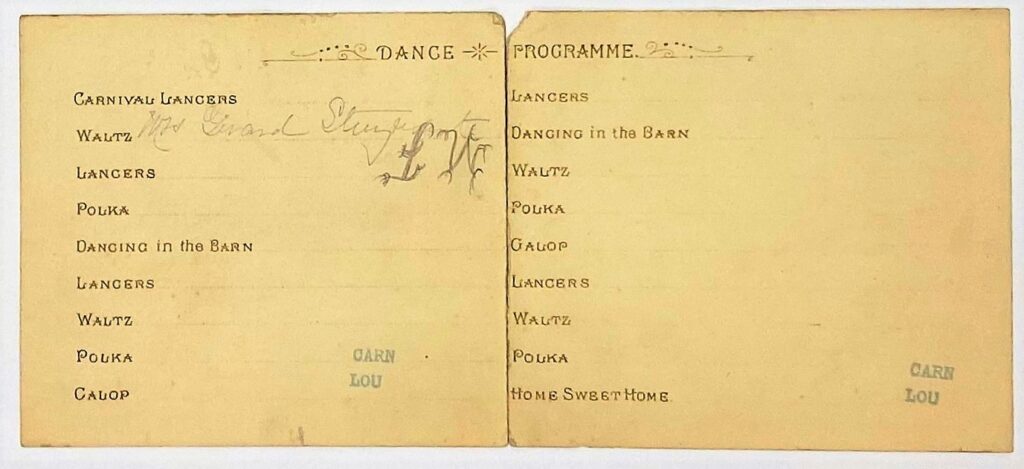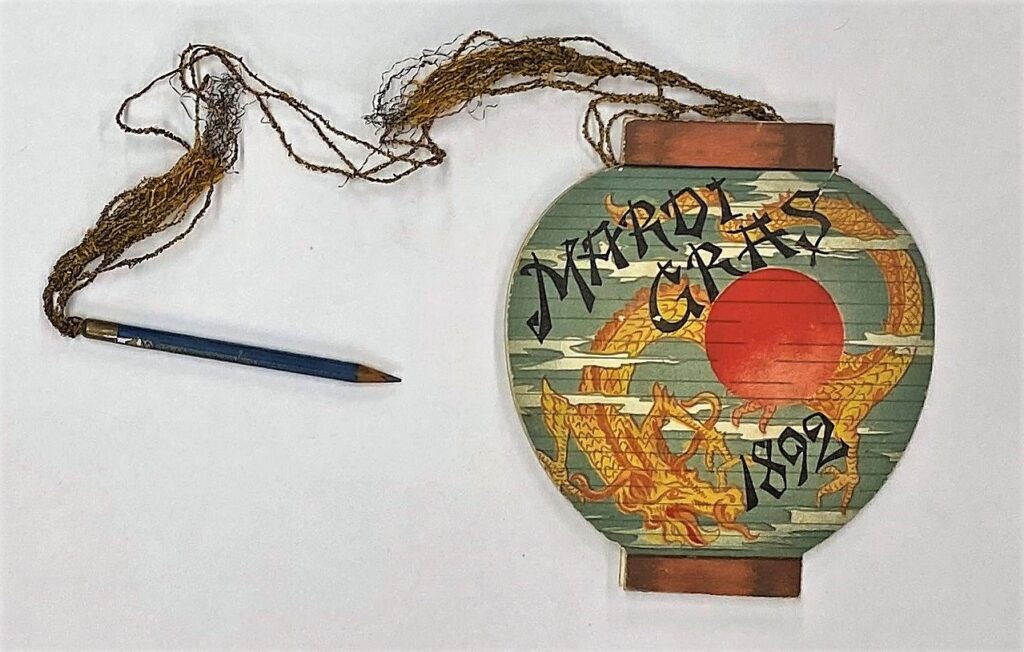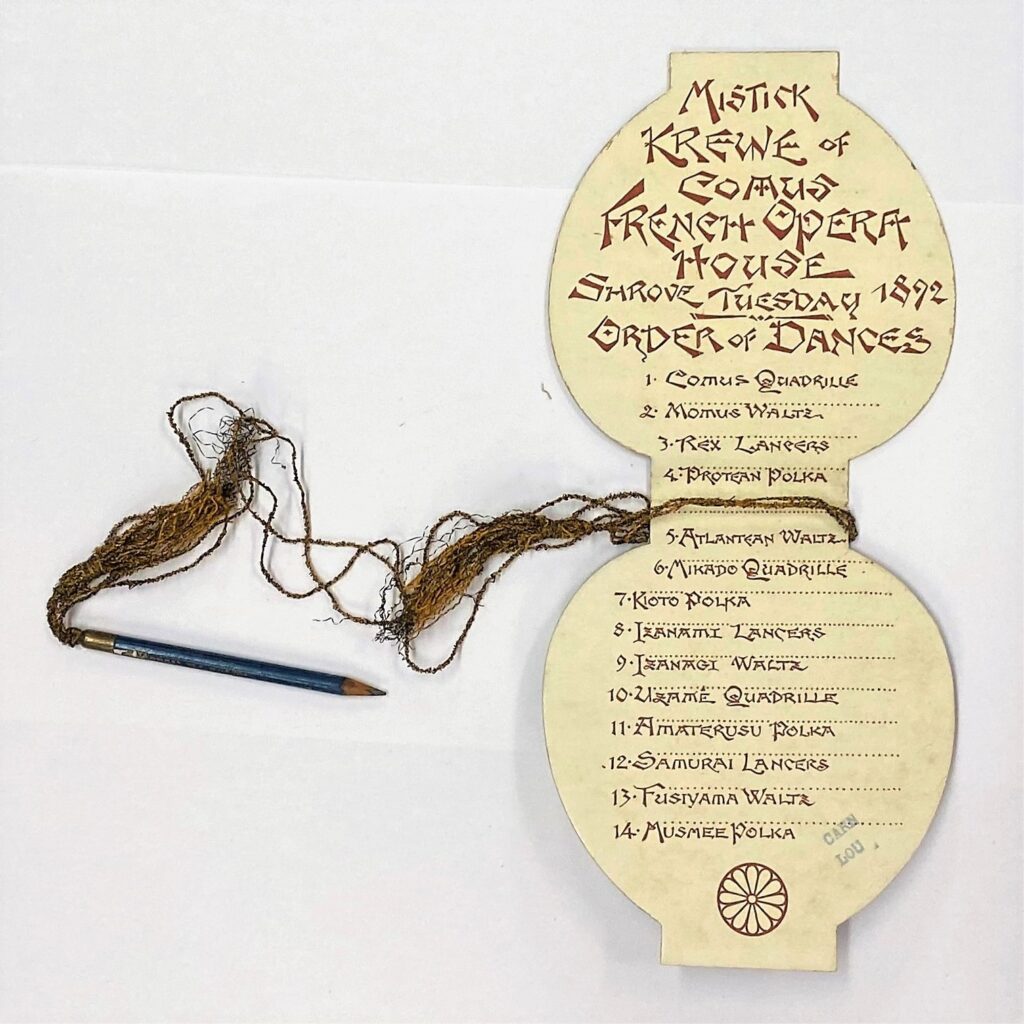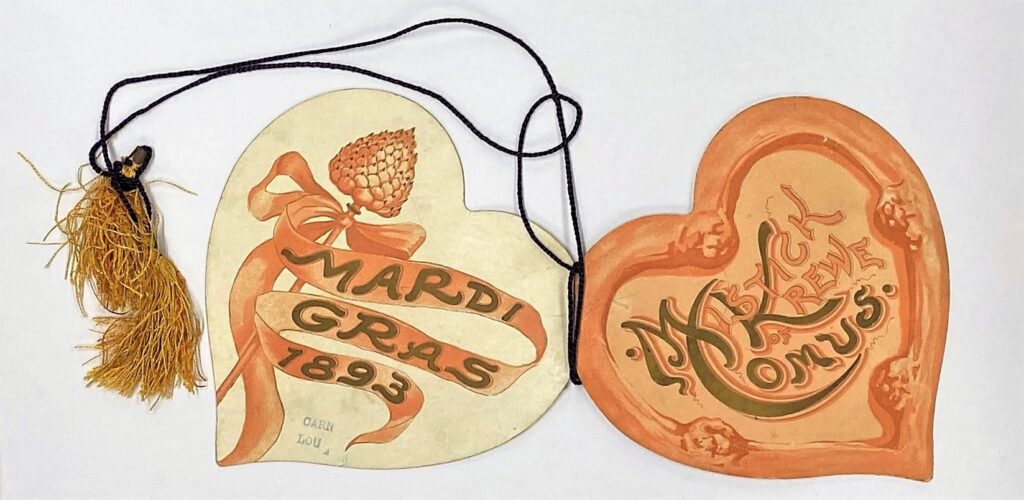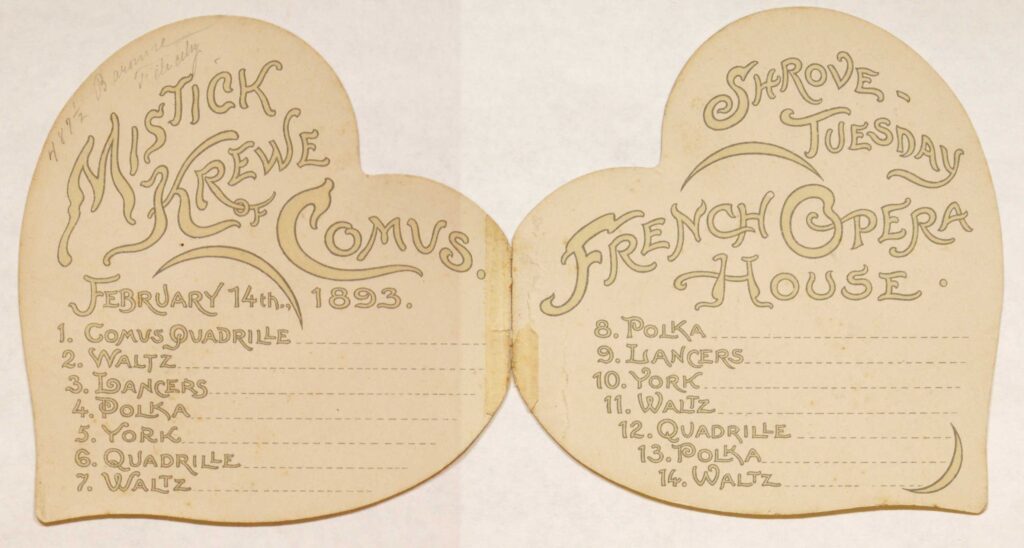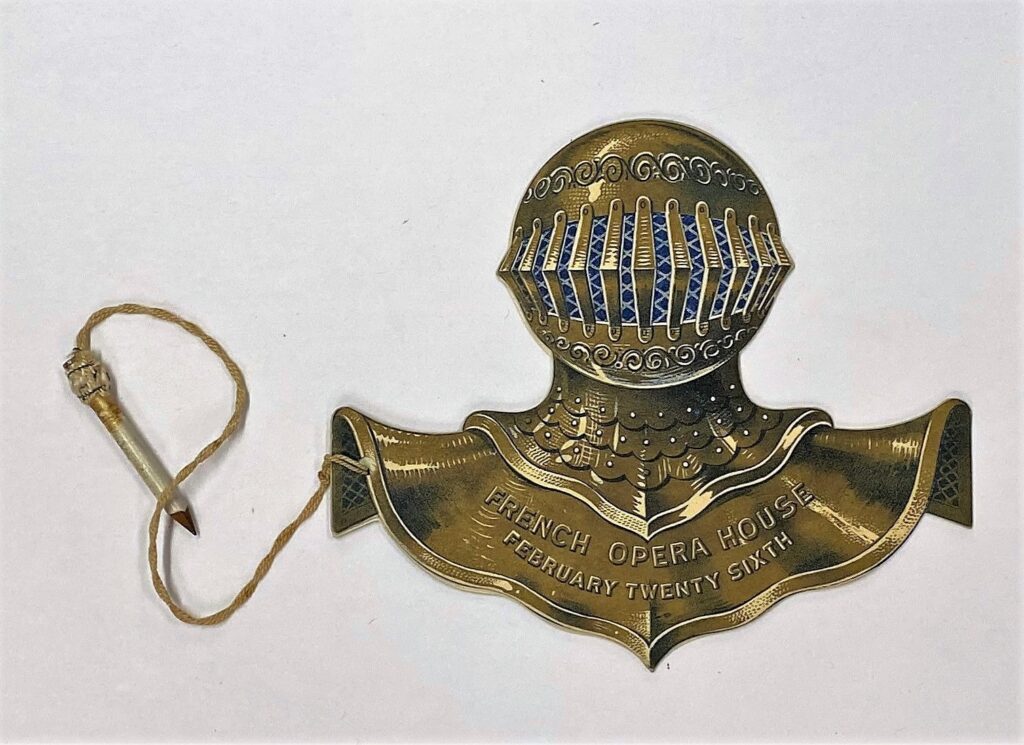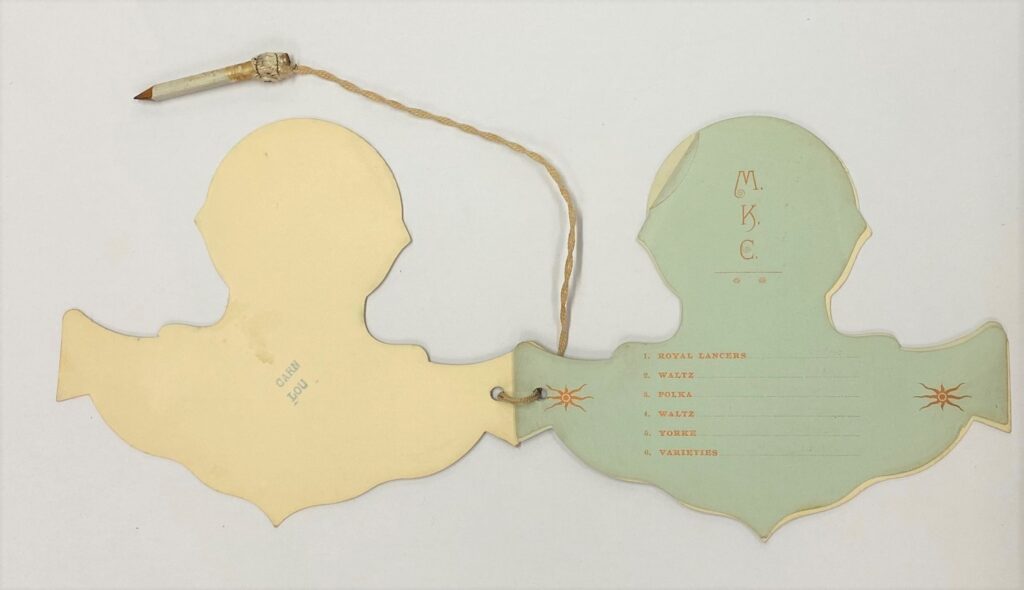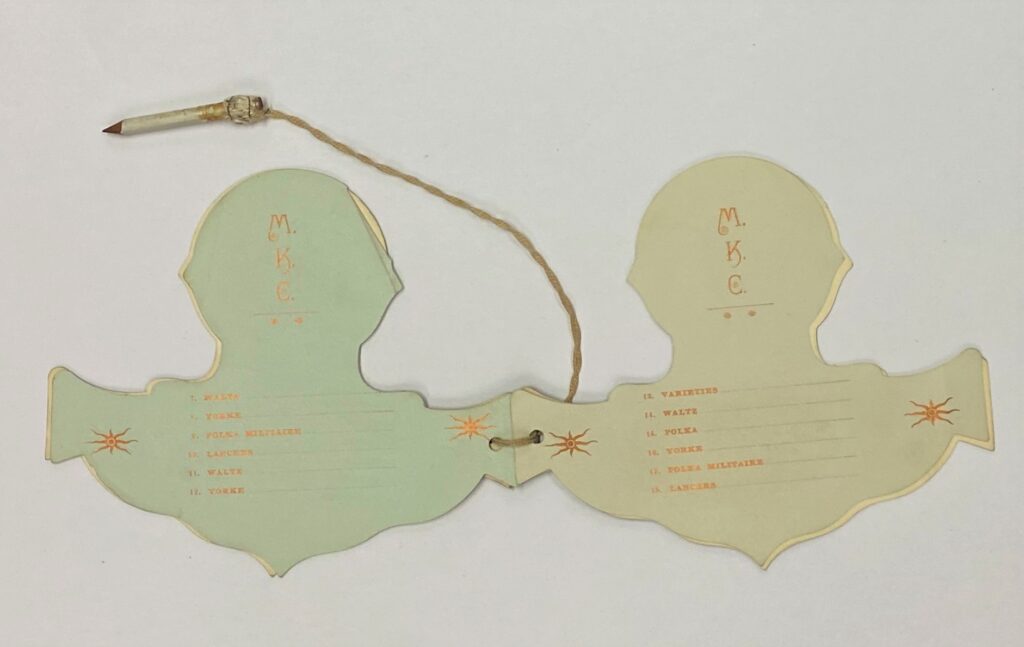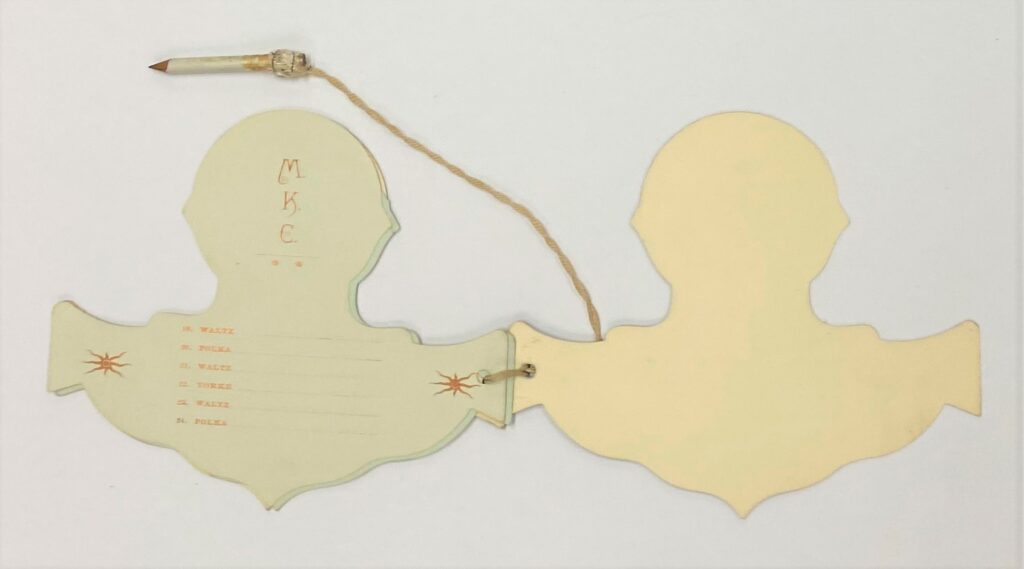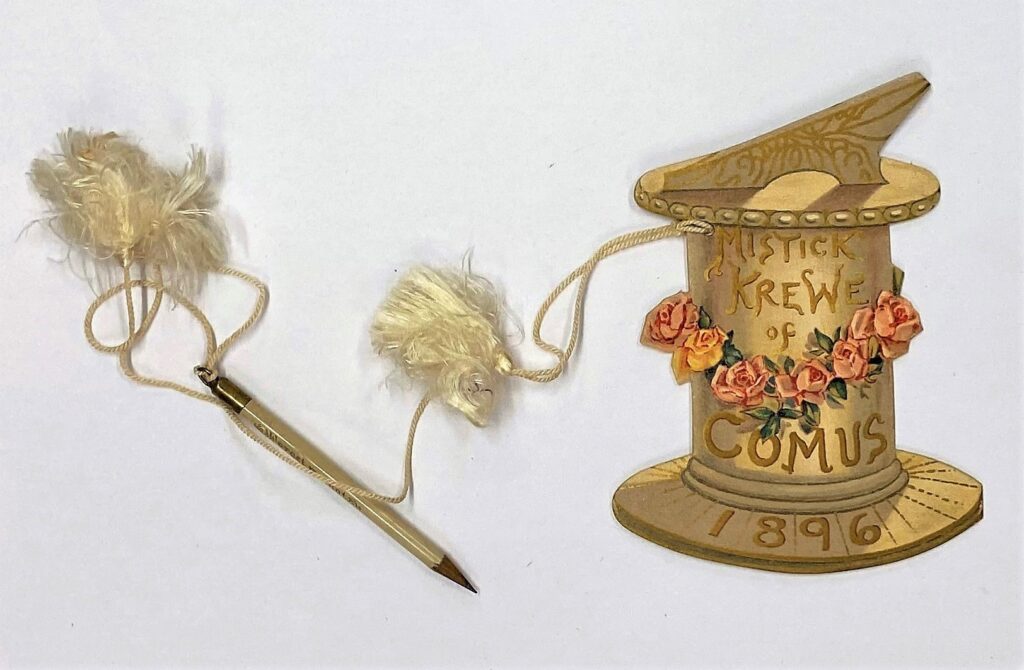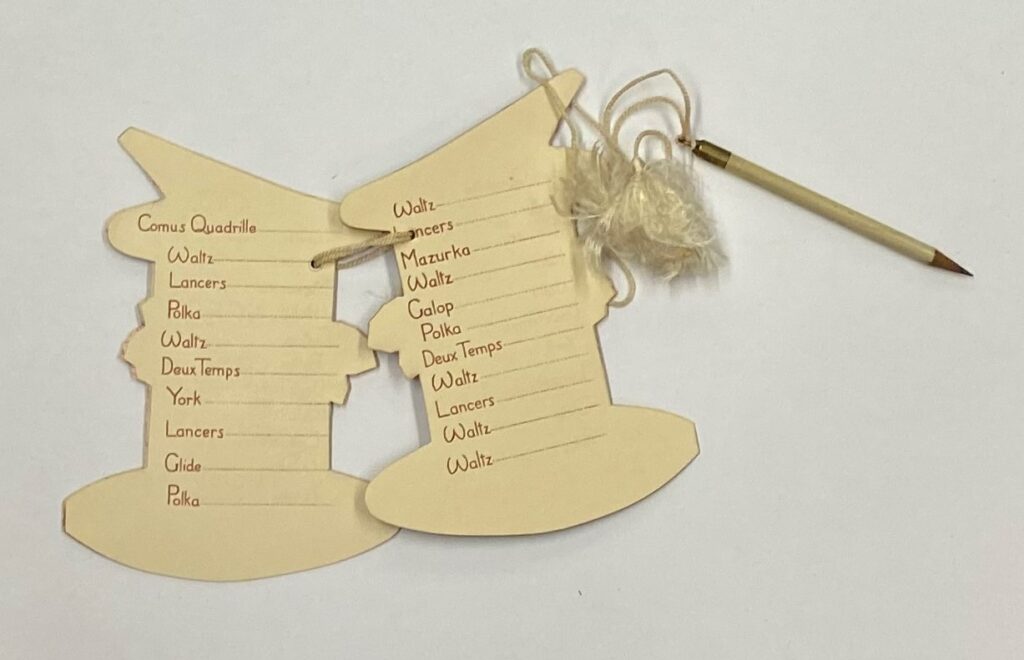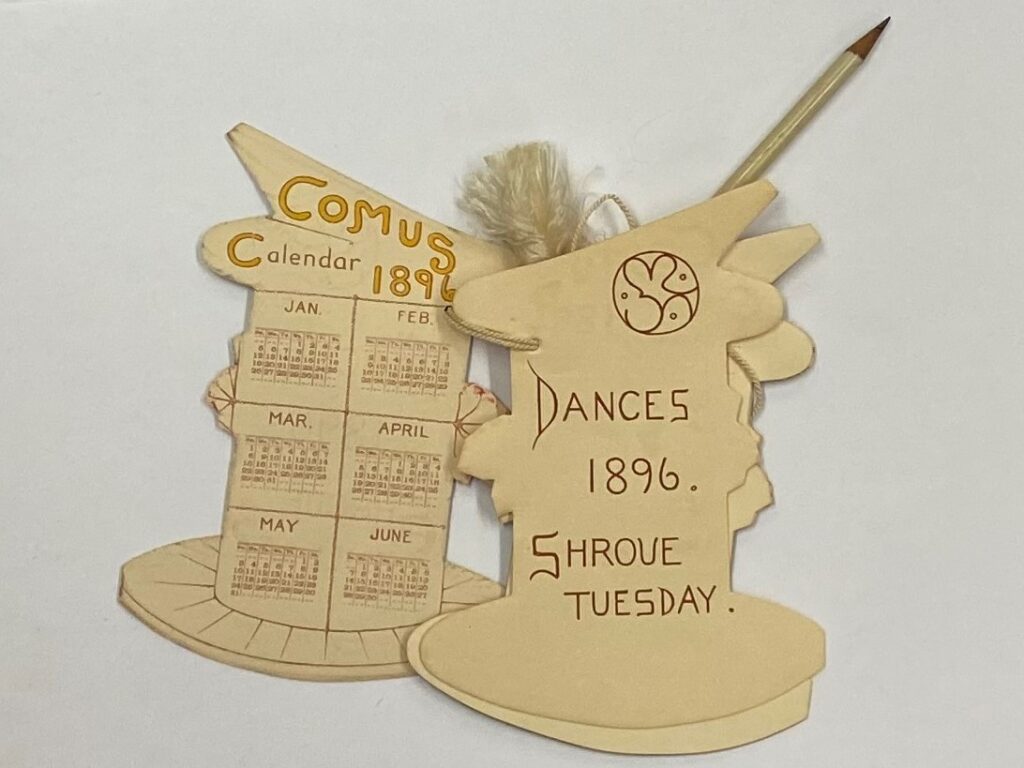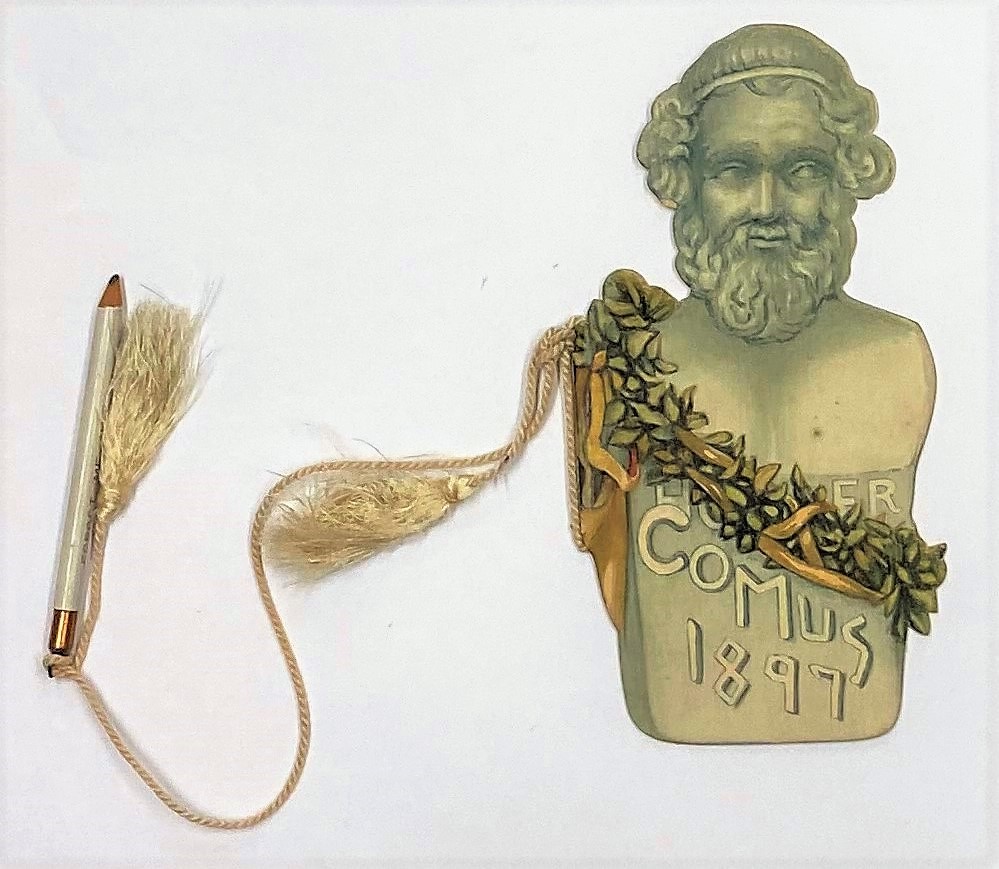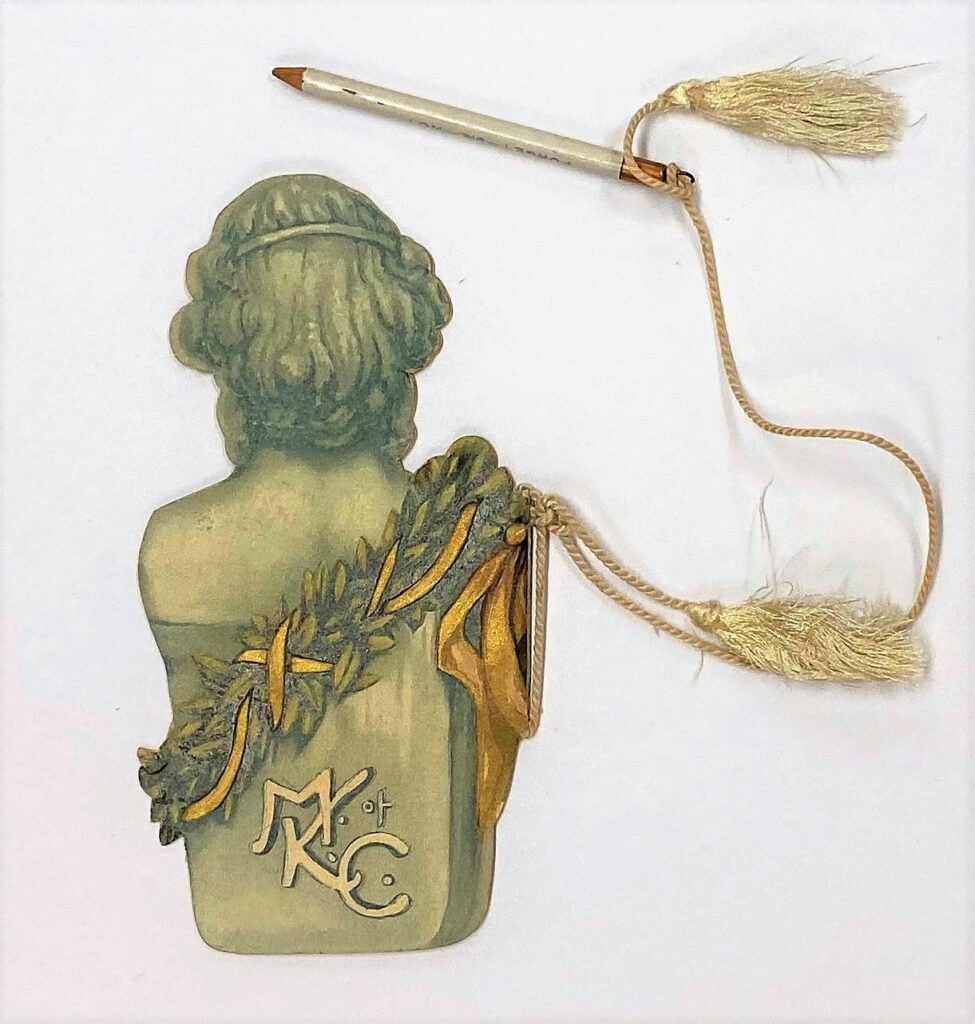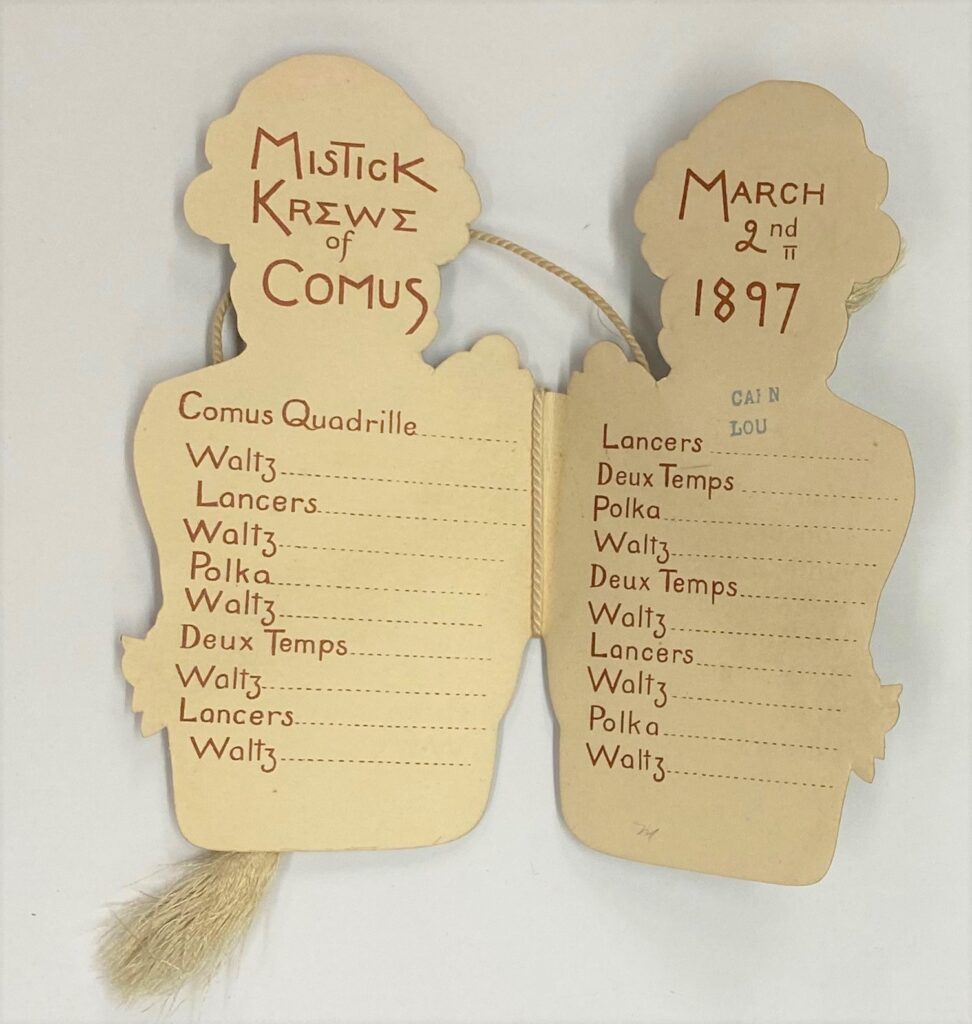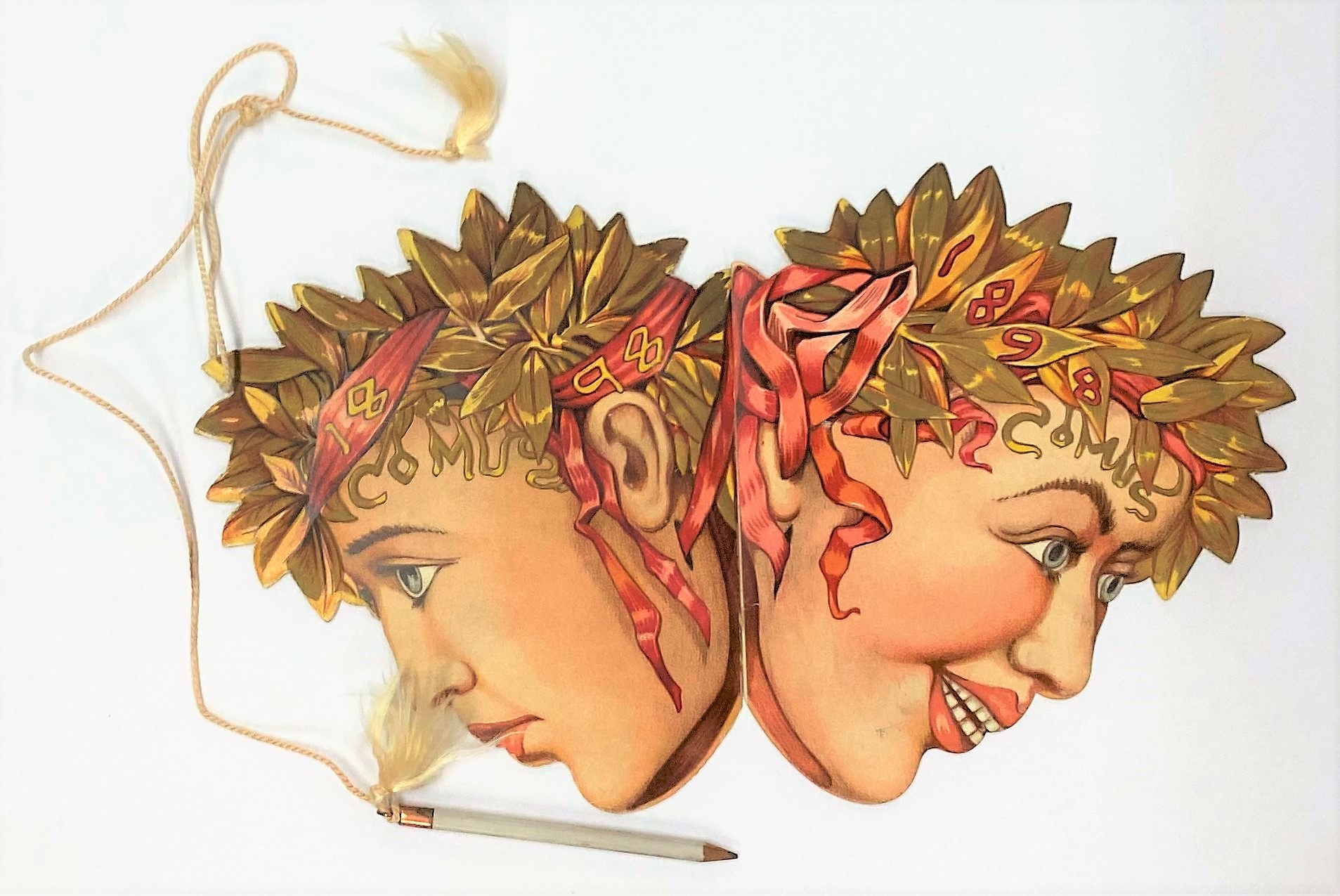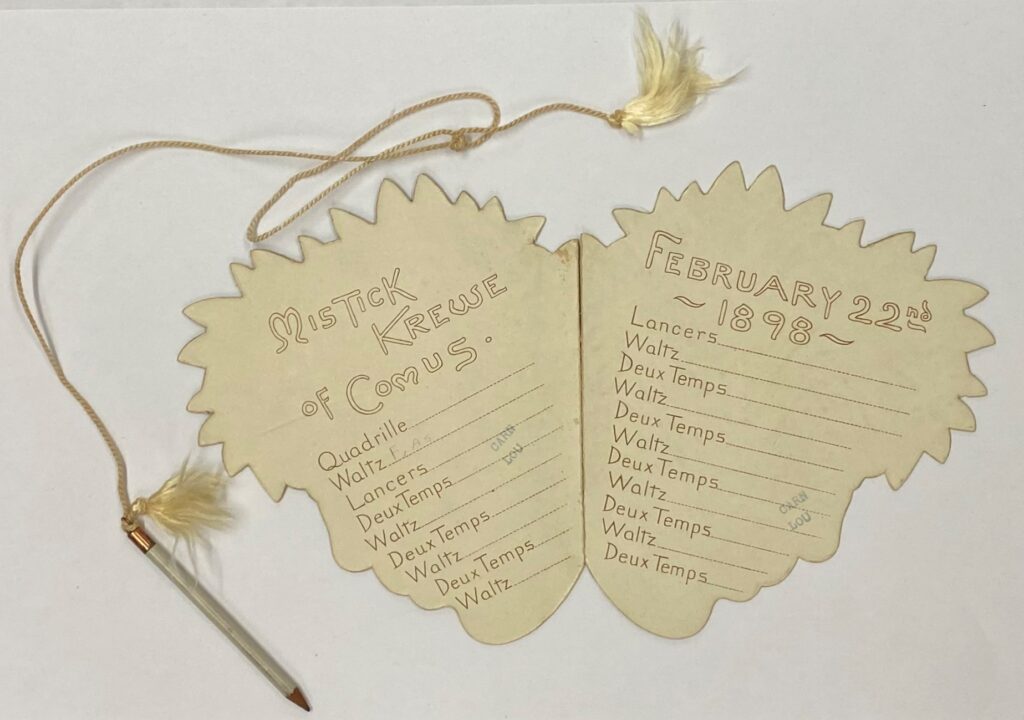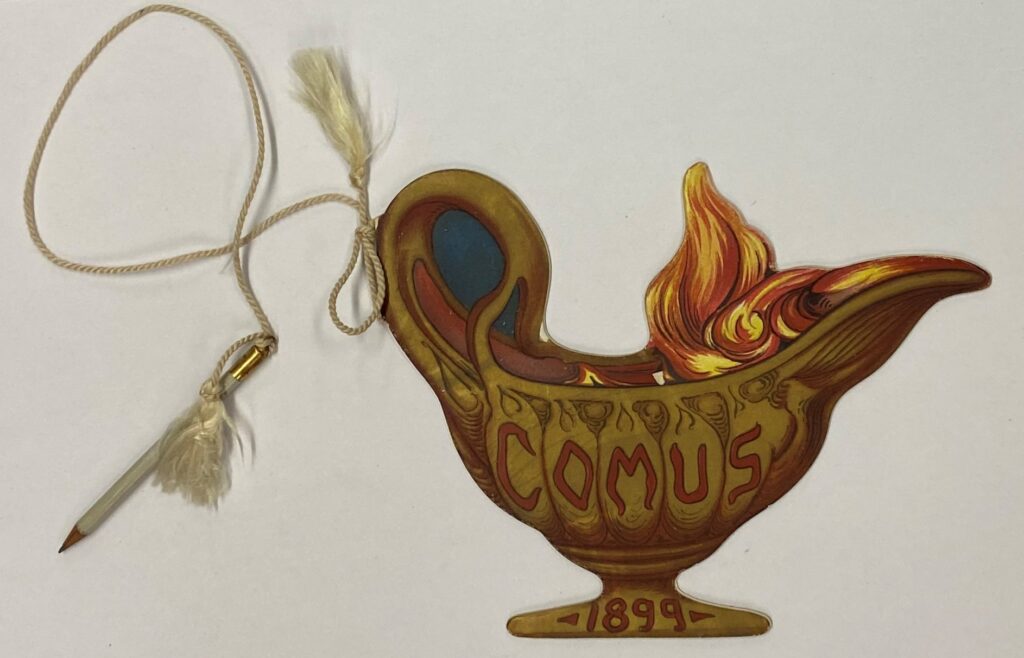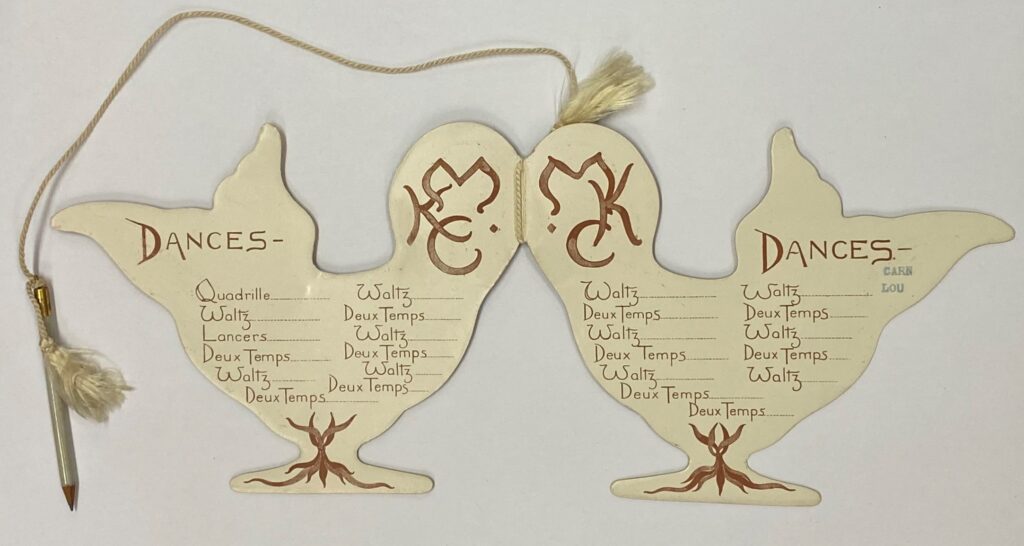
In the 19th century, dance cards were small booklets or cards that women used during formal balls and social dances to set their partners and arrange dances in sequence. These cards were important in both social etiquette and the conventions of formal dance parties. They helped coordinate the evening and made sure participants had partners for as many dances as possible. This system allowed women to control whom they danced with and when, preserving propriety and social equilibrium.
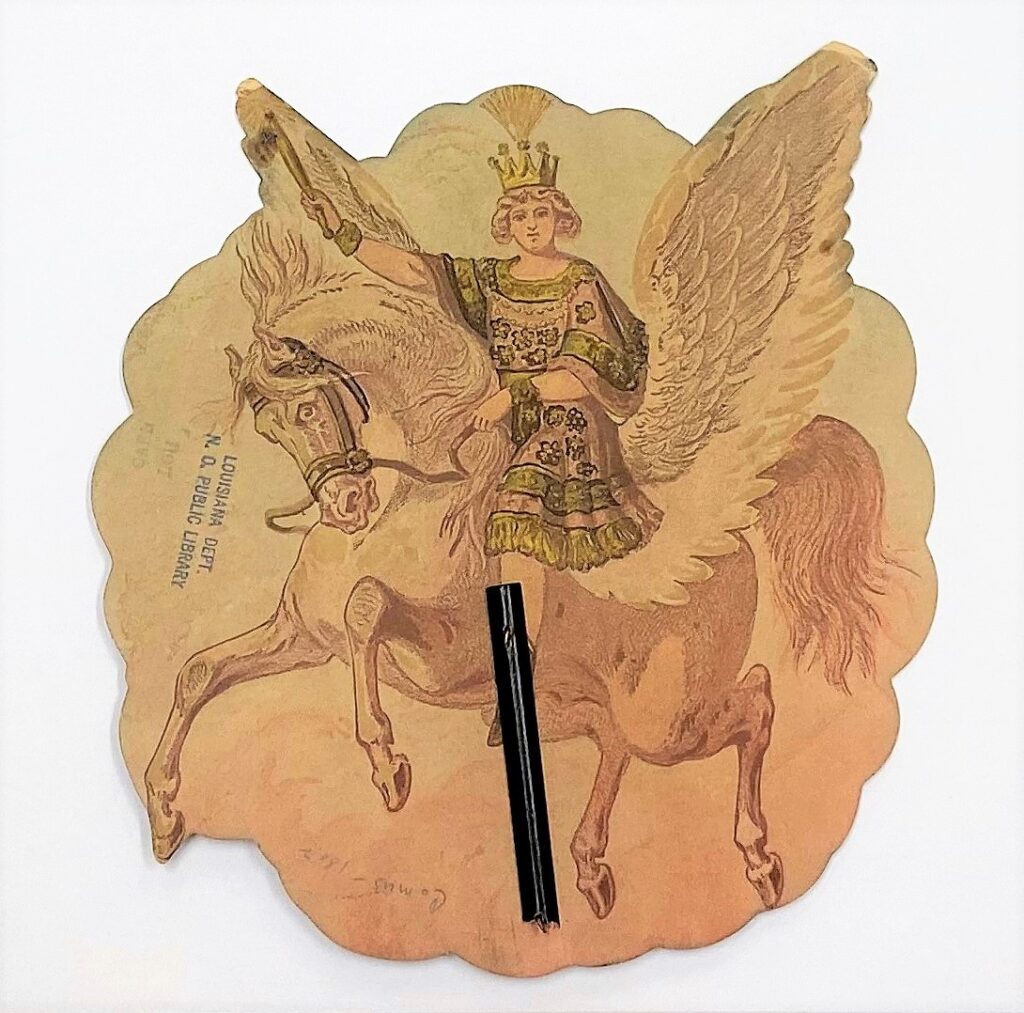
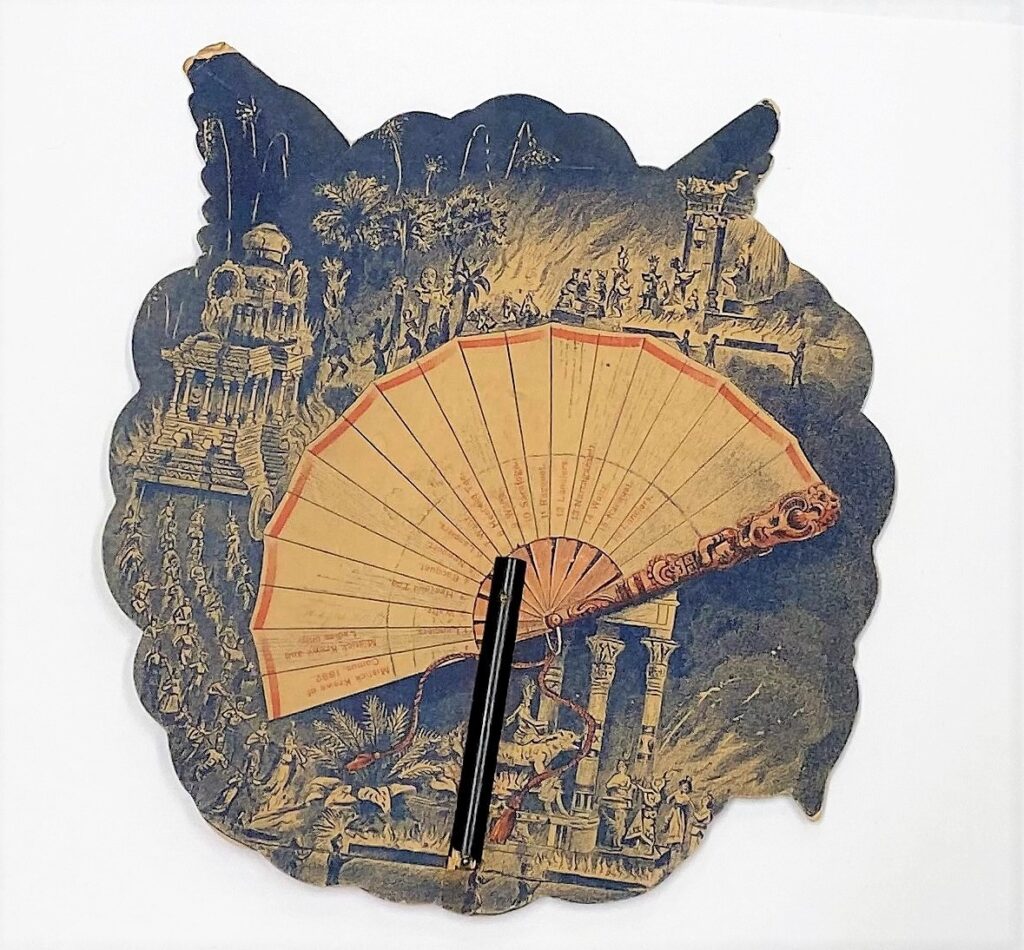
European and American ballrooms held dance cards — used in formal occasions including debutante balls, society gatherings, military functions, and Mardi Gras celebrations — as some of the most well-liked forms. They were considered status symbols and symbols of sophistication.
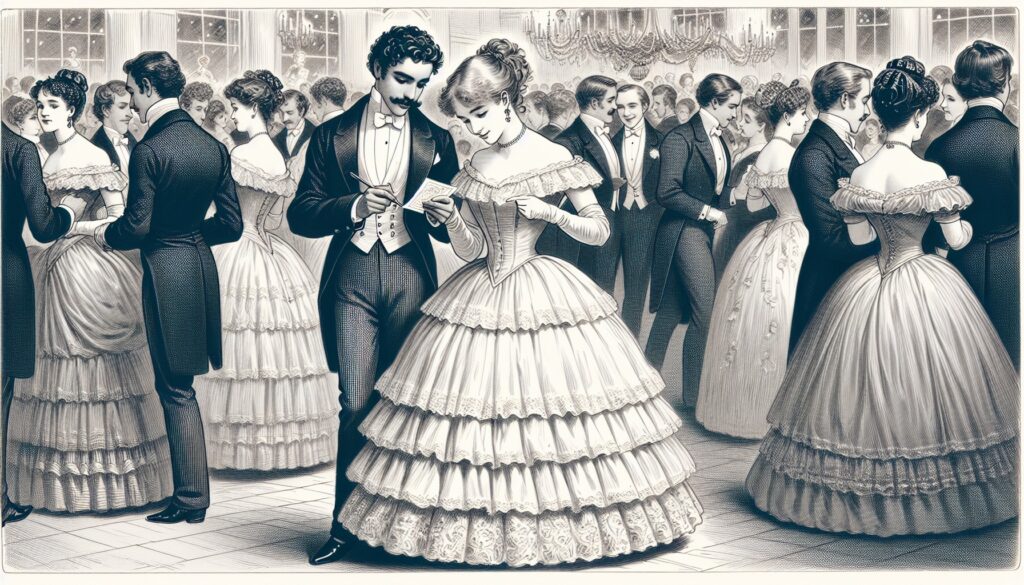
At the start of the ball, gentlemen would approach ladies to suggest dancing. The lady or her chaperone would write down the names of the gentlemen next to their respective dances on her card. This process aided smooth engagements and the elimination of awkwardness. Dance cards served as practical instruments and established customs of social dancing in the 19th century.
~ Click images to view larger on a new page ~